Westwoodside Church of England Academy Music Curriculum
Music Vision Statement
At Westwoodside Church of England Academy, we believe that music is a universal language that inspires creativity, expression, and joy, while nurturing pupils’ confidence and sense of identity. Our vision is for every child to see themselves as a musician—capable, curious, and courageous in their exploration of sound, rhythm, melody, and performance. We foster a love of music by making learning meaningful, inclusive, and accessible to all.
Rooted in our Christian vision to “Be the light for other people. Live so they will see the good things that you do,” our music curriculum enables pupils to let their light shine through creativity, collaboration, and celebration. We provide a wide range of opportunities—including singing, instrumental work, composition, listening, and performance—to ensure every pupil can access and engage with music in rich and varied ways. We promote high expectations and self-expression for all, encouraging pupils to take ownership of their learning and to embrace both practice and performance as part of the musical journey. Exploration and creativity are woven throughout, empowering all pupils to share their musical voice, support one another, and grow into confident, capable musicians who use their talents to bring joy and make a positive difference beyond the classroom.
Westwoodside Music Curriculum Pledge
During their time at Westwoodside Church of England Academy, all pupils will have the opportunity to:
-
Take part in high-quality, hands-on music lessons that build skills in singing, performing, composing and listening
-
Explore and appreciate music from different times, places and cultures, and understand the history and context behind it
-
Experience cross-curricular learning through music linked to wider topics and subjects
-
Experience live music performances and meet professional musicians to inspire their musical journey
-
Participate in weekly singing assemblies that build vocal skills, enjoyment and confidence
-
Have the opportunity to join our school choir and be part of performances at whole-school celebrations and community events
-
Work with visiting music specialists and have the opportunity to learn an instrument
-
Build creativity, teamwork and resilience through collaborative music-making
-
Engage in performance opportunities that showcase personal progress and celebrate musical achievement
-
Express themselves, find joy, and let their light shine through music
-
Explore careers linked to music
Westwoodside Music Curriculum Intent
Our intent for our music curriculum is first and foremost to help pupils to feel that they are musical, and to develop a life-long love of music. We focus on developing the skills, knowledge and understanding that learners need in order to become confident performers, composers, and listeners.Our curriculum introduces pupils to music from all around the world and across generations, teaching them to respect and appreciate the music of all traditions and communities. Pupils will develop the musical skills of singing, playing tuned and untuned instruments, improvising and composing music, and listening and responding to music. They will develop an understanding of the history and cultural context of the music that they listen to and learn how music can be written down.
Through music, our curriculum helps to develop transferable skills such as team-working, leadership, creative thinking, problem-solving, decision-making, and presentation and performance skills. These skills are vital to each individual’s development as a learner and have a wider application in their general lives outside and beyond school.
We have adopted Kapow Primary’s Music scheme of work to enable pupils to meet the end of key stage attainment targets outlined in the National curriculum and the aims of the scheme align with those in the National curriculum.
Westwoodside Music Curriculum Implementation
We take a holistic approach to music, in which the individual strands below are woven together to create engaging and enriching learning experiences.
Each unit combines these core concepts within a cross-curricular topic designed to capture pupils’ imagination and encourage them to explore music enthusiastically. During their time at Westwoodside Academy, pupils will be taught how to sing fluently and expressively, and play tuned and untuned instruments accurately and with control. They will learn to recognise, demonstrate and name the interrelated dimensions of music - pitch, duration, tempo, timbre, structure, texture and dynamics -and use these expressively in their own improvisations and compositions.
Our music curriculum follows the spiral model where previous skills and knowledge are returned to and built upon. Learners progress in terms of tackling more complex tasks and doing more simple tasks better, as well as developing understanding and knowledge of the history of music, staff, and other musical notations, the interrelated dimensions of music and more.
In each lesson, pupils will actively participate in musical activities drawn from a range of styles and traditions, developing their musical skills and their understanding of how music works. Lessons incorporate a range of teaching strategies from independent tasks, paired and group work as well as improvisation and teacher-led performances. Lessons are ‘hands-on’ and incorporate movement and dance elements, as well as making cross curricular links with other areas of learning.
Key vocabulary is discussed alongside more factual knowledge throughout music lessons to encourage pupils to build a strong foundation of musical knowledge through recall of key facts and vocabulary.
Teachers have access to multiple videos related to each unit to develop subject knowledge and support ongoing CPD, aiding teachers in their own acquisition of musical skills and knowledge.
Alongside class-based music learning, pupils take part in weekly singing assemblies, we encourage pupils to take part in our school choir and organise whole-school concerts and celebrations at St Nicholas Church, Haxey. If pupils wish to learn how to play a musical instrument, they are enabled to do this with the direction of specialised music teachers who visit the school to deliver lessons.
Westwoodside Music Curriculum Impact
The impact of the Music curriculum at Westwoodside Academy can be seen through pupils being engaged and excited by our music curriculum. The skills that they are taught equip them with a range of skills to enable them to appreciate music throughout their lives. Our pupils become confident performers, composers and listeners, who can express themselves musically at school and beyond. They show an appreciation and respect for a range of music from a range of genres across a variety of generations. Teachers can assess learning during each lesson against the learning objective and use end of unit performances and compositions to aid their assessments of pupils’ progress against national curriculum expectations for each key stage.
SEND Provision in Music
‘High quality teaching that is differentiated and personalised will meet the individual needs of the majority of children and young people. Some children and young people need educational provision that is additional to/or different from this...special educational provision is underpinned by high quality teaching and is compromised by anything less’
‘Lessons should be planned to address potential areas of difficulty and to remove barriers to pupil achievement’ (SEND Code of Practice 2015)
In the first instance, provision for SEND children should be planned in accordance with their individual support plans, focusing specifically on areas of strength and needs and the use of reasonable adjustments. Additional strategies to support identified areas of need should be taken from The Quality First Teaching booklet. https://www.sensiblesenco.org.uk/shared-files/1903/send-quality-first-teaching-toolkit.pdf
The Quality First Teaching booklet includes practical strategies which should be used to support the following four broad areas of need:
Cognition and learning needs - specific learning difficulties (dyslexia, dyspraxia, dyscalculia), moderate learning difficulties, severe learning difficulties, global delay, profound and multiple learning difficulties
Social emotional and mental health needs - behaviour, emotional and social difficulties, mental health difficulties, ADHD, depression, eating disorders, attachment disorders
Communication and interaction needs - Speech, language and communication needs, autistic spectrum disorder, Asperger’s Syndrome
Sensory and/ or physical needs - Visual impairment, hearing impairment, multi-sensory impairment, physical disability, cerebral palsy Additional support and advice regarding individual SEND needs can be sought from the subject leader and SENDCO.
Enhancements within the Music curriculum
In each year group, learning in music is enhanced through trips, live performances, and visitors to the school—giving pupils first-hand musical experiences and opening a window to the wider world of music. Children are encouraged to take part in extracurricular musical opportunities such as choir, instrumental lessons, and performances both in school and in the community. These experiences inspire creativity, deepen musical understanding, and foster a lifelong love of music.
In each year group, learning in Music is enriched through hands-on experiences, educational visits, and visitors who share real-life musical journeys with the pupils. These opportunities bring musical skills, history, and expression to life by connecting pupils with the wider world of music-making. Whether through live performances, workshops with professional musicians, or visits to concerts and theatres, pupils gain insight into how music is used to communicate, celebrate, and inspire.
Pupils are encouraged to experiment, take creative risks, and reflect on their own compositions and performances as well as those of others. They develop skills in singing, playing instruments, composing, improvising, and listening with understanding, while exploring how music connects to culture, history, and current issues. These enriching experiences support our aim to nurture confident, expressive, and reflective young musicians with a deep appreciation for the value and impact of music in their lives and the wider world.
Music curriculum Parents/Career Statement
-
Parents and carers will be invited to attend music workshops, class performances, concerts, and other musical events taking place in school and in the wider community.
-
To engage in their child’s musical learning, parents can access the school website to find information about the music curriculum and view photographs and videos showcasing pupils’ musical experiences and achievements.
-
Parents will be informed of their child’s progress in music, and the experiences they have had, through parent meetings and their child’s annual report.
-
Throughout the year, they will receive letters and updates highlighting the musical opportunities their child has taken part in or will be participating in.
Music Curriculum Core Concepts
|
Listening and evaluating |
Appreciation, Response, and Critical Thinking |
|
Creating sound |
Exploration and Expression Through Sound |
|
Notation |
Understanding and Using Musical Symbols |
|
Improvising and composing |
Inventing and Developing Musical Ideas |
|
Performing |
Confidence, Communication, and Musicality |
Music Long Term Plan
Year 1/2 |
Keeping the pulse (my favourite things) Pupils explore keeping the pulse together through music and movement, by exploring their favourite things.
|
Tempo (snail and mouse) Pupils use their bodies and instruments to listen and respond to pieces of music with fast and slow speeds; learn and perform a rhyme and a song focussing on fast and slow.
|
Pitch (Superheroes) Pupils learn how to identify high and low notes and to compose a simple tune to represent a superhero.
|
Instruments (Musical storytelling) Pupils learn how events, actions and feelings within stories can be represented by pitch, dynamics and tempo.
|
Singing (on this island) Learning folk songs and creating sounds to represent three contrasting landscapes: seaside, countryside and city.
|
Pitch (Theme: Musical me) In this unit, children are exploring the song ‘Once a Man Fell in a Well’, playing it using tuned percussion and reading simple symbols representing pitch. |
| Cycle B | Seaside: Dynamics Exploring the connection between sound and the environment, pupils work together to create a seaside soundscape using percussion instruments, vocal sounds and body percussion. |
Fairytales: Sound patterns Examining a range of fairytales, pupils identify key moments in each story and clap along to repeated words and phrases, creating rhythmic patterns. |
Animals: Call and response Developing rhythm and pulse through chanting call-and-response sound patterns and performing with untuned percussion instruments. |
Under the sea: Musical symbols Exploring the depths of the sea through music, movement, musical symbols and tuned percussion instruments. |
Space: Contrasting dynamics Developing their understanding of contrasting dynamics, pupils listen to music inspired by planets and create their own space-themed compositions. |
Myths and legends: Structure Investigating musical structure by listening to, analysing and performing a song based on a well-known myth. |
Year 3/4 |
South Africa instrumental lessons Whole-class instrumental lessons on tuned percussion. This South Africa-themed unit develops pupils’ rhythmic, singing and notation skills. |
Developing singing technique Pupils develop their singing technique. Learning to keep in time and work on musical notation and rhythm, the unit finishes with a group performance of a song with actions. |
Caribbean instrumental lessons Learning about the history and features of calypso music, performing a calypso-style song with voices and tuned percussion in multiple parts and playing from staff notation. |
Body and tuned percussion Pupils will explore the rainforest through music and be introduced to new musical terms. They will also use a mixture of body percussion and tuned percussion instruments as the pupils create their own rhythms of the rainforest, layer by layer. |
Jazz Learning about ragtime style music, traditional jazz and scat singing. pupils create a jazz motif using a swung rhythm. |
Adapting and transposing motifs Drawing upon their understanding of repeating patterns in music, pupils are introduced to the concept of motifs. |
| Cycle B | Creating compositions for an animation Exploring sounds and rhythms to reflect the events in a story. |
Rock and Roll Music Learning about the origins and features of rock and roll music and learn how to play the handjive |
Ballads Children learn what ballads are, how to identify their features and how to convey meaning when performing them. |
Haiku - music and performance This Japanese inspired topic looks at the spring time of Hanami |
Changes in pitch, , tempo and dynamics - Rivers Learning to listen to changes in pitch, tempo and dynamics relating this to something tangible and familiar |
Samba and Carnival sounds and instruments Getting a feel for the sounds and culture of South America |
Year 5/6 Cycle A |
Film music Pupils learn how film soundtracks use major and minor keys to convey mood, and how music can be represented through both graphic and staff notation to communicate ideas effectively. |
Composition notation Based on the theme of Ancient Egypt, pupils learn to identify the pitch and rhythm of written notes and experiment with notating their compositions, developing their understanding of staff notation. |
Musical theatre Pupils learn how singing, acting, and dancing combine to create an overall performance. |
Theme and variations (Theme: Pop Art) Pupils explore the musical concept of theme and variations and discover how rhythms can ‘translate’ onto different instruments. |
Songs of World War 2 Pupils learn how songs from World War II reflected the spirit of the time and explore musical elements such as pitch using Solfa syllables and contrast through counter-melody. |
Composing and performing a Leavers' song |
| Cycle B | Looping and Remixing Children learn all about how dance music is made particularly focusing on rhythmic and sound loops. |
Blues Children are introduced to this famous genre of music and its history alongside learning to identify the key features of Blues music. |
Dynamics pitch and texture - theme Coast Children's explore Fingal's Cave by Felix Mendelssohn and further develop their improvisation and compositional skills. |
Composition to represent the festival of colour - Theme Holi Festival Children explore the association between music, sounds and colour. Performing their own composition to represent the festival of Holi. |
South and West Africa Children learn Shosholoza a traditional south African song and play the accompanying chords using tuned percussion. | Composing and performing a Leavers' song Children spend the topic creating their very own leavers’ song personal to their experiences as a class. |

|
26 27 Mixed-age Music-cycle-B Parent-curriculum-overview (1) | [pdf 284KB] |

|
|
|
26 27 Mixed-age Music-cycle-A Parent-curriculum-overview | [pdf 295KB] |
|
If you wish to know any more detail with regards to our music curriculum please don't hesitate to contact our school office at admin@wws.academy
Music at Westwoodside Church of England Academy


Pond Lights Performance
Our school choir performed at the Pond Lights Westwoodside community celebration. Pupils sang beautifully and confidently, spreading joy and helping to create a warm, festive atmosphere for everyone who attended.


Young Voices
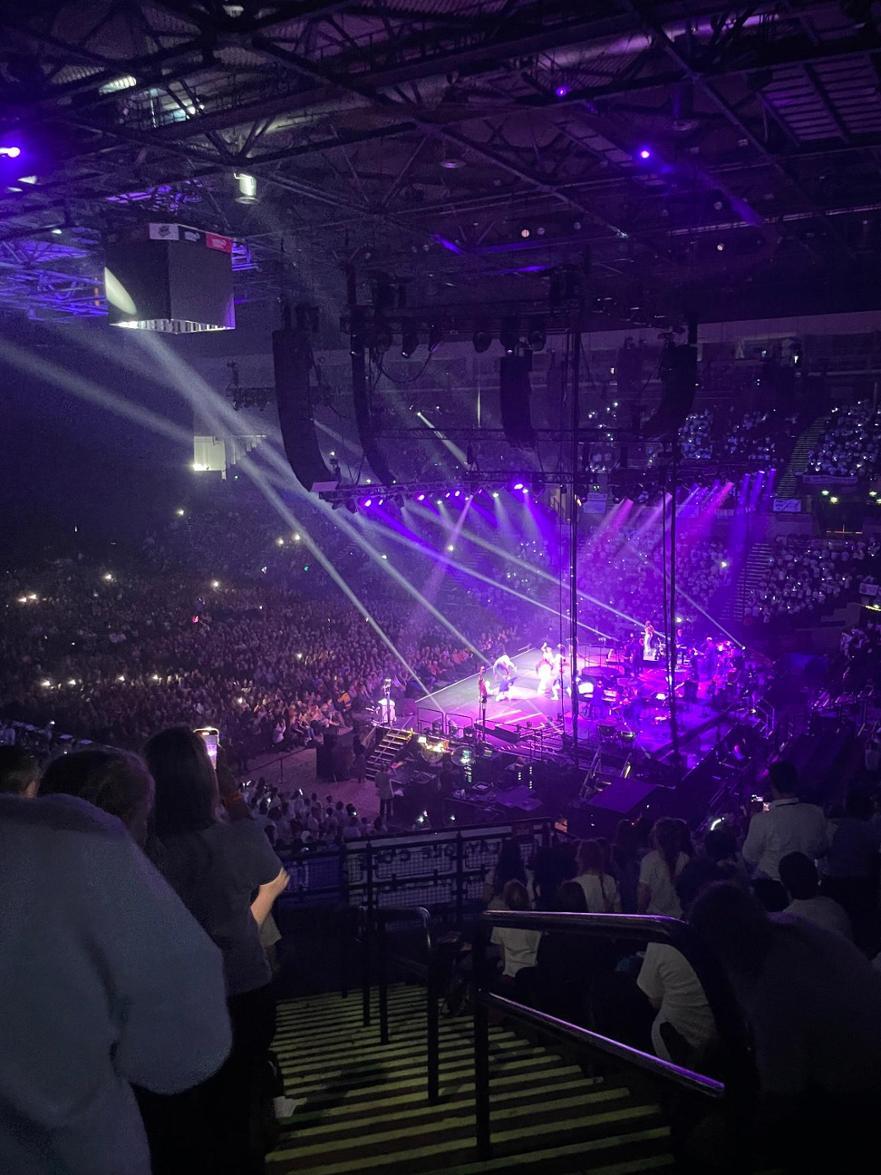
Pupils had the exciting opportunity to enrich their music learning by taking part in the Young Voices concert at Sheffield Arena. Joining thousands of other pupils from across the region, they experienced the joy of singing as part of one of the largest school choirs in the world. In preparation, pupils learnt a wide repertoire of songs and harmonies, developing their vocal skills, musical confidence, and teamwork. On the day, they performed alongside professional musicians and artists, experiencing the energy, atmosphere, and inspiration of a live concert.