Westwoodside Church of England Academy Art Curriculum
Art Vision Statement
At Westwoodside Church of England Academy, Art is inclusive, inspiring and empowering for all. We encourage every child to aim high, take pride in their progress, and develop a love for creating through their own unique abilities. All artists are celebrated in our school, and we foster a culture of supportive critique, where pupils are guided to improve their work while maintaining confidence and joy in the creative process.
Rooted in our Christian vision to “Be the light for other people. Live so they will see the good things that you do”(Matthew 5:16), our Art curriculum enables pupils to shine by expressing their individuality and exploring the richness of the world through different artistic styles and cultural influences. Through engaging, knowledge-rich lessons, pupils are encouraged to think critically, reflect on their ideas, and connect emotionally with their work. Art at Westwoodside nurtures a strong sense of self, community, and purpose—helping pupils to understand their creative voice and how it can inspire and uplift others.
Westwoodside Art Curriculum Pledge
During their time at Westwoodside Church of England Academy, all pupils will have the opportunity to:
-
Take part in high-quality, hand on, art lessons that build skills in drawing, painting, sculpture and craft and design.
-
Explore and appreciate art from different times, places and cultures, and understand the history and context behind it
-
Experience cross-curricular learning through art linked to wider topics and subjects
-
Build creativity, teamwork and resilience through critical evaluation of their own and others work
-
Express themselves, find joy, and let their light shine through art
-
Explore careers linked to art.
-
Have opportunities to showcase their learning through exhibitions, gallery style displays and community arts projects.
Westwoodside Art Curriculum Intent
At Westwoodside Church of England Primary Academy we value Art as an important part of a child’s entitlement to a broad and balanced curriculum. Our art curriculum is accessible to all and is designed to ignite pupils curiosity and foster pupils' creativity, imagination and visual literacy. This ability to interpret, analyse and create visual images, enables pupils to understand and communicate through visual expressions.
The aim is to build their confidence to explore, experiment, express ideas, and convey meaning through visual forms and nurture a sense of awe and wonder within this in order to help pupils appreciate their unique place within our world.
Our high-quality engaging art curriculum inspires and challenges our pupils, equipping them with the knowledge and skills they need to experiment, invent, create and improve their own works of art, craft and design, to love what they create and inspires them to approach challenges with the mindset of artists and designers.
We want our pupils to be able to reflect using appropriate vocabulary to critique and have the confidence to comment on their own work, and that of their peers and of the wider art world.
The National curriculum refers to pupils developing their mastery of art and design techniques, including drawing, painting and sculpture. Our Art and design curriculum returns to these three key areas during their time in school along with a fourth key area: Craft and design. This area focuses on giving pupils a broad range of opportunities to explore different craft and design techniques during primary school.
In the Early Years Foundation Stage, art is embedded through the Expressive Arts and Design area of learning, using thematic links aligned with our Key Stage 1 curriculum to ensure smooth progression. From Key Stage 1 onwards, we deliver the National Curriculum through a carefully adapted version of the Kapow Art Scheme. This provides clear progression in knowledge, vocabulary, skills and concepts, supported by high-quality resources.
Westwoodside Art Curriculum Implementation
In EYFS, art is taught through carefully planned, thematic units that lay the foundations for future learning. In Key Stages 1 and 2, art is delivered through weekly, high-quality lessons that begin with a short activity revisiting prior learning and end with a reflection that consolidates learning.
Each lesson starts with a ‘Recap and Recall’ section, providing opportunities for pupils to retrieve prior learning, this helps reinforce key knowledge, activate long-term memory and create connections between past and new learning. It enables teachers to check understanding before introducing new content. Key Stage 1 and 2 classes use a sketch book, enabling children to revisit and reflect on previous learning at regular intervals.
Teachers use formative assessment throughout lessons so that teaching can be adapted quickly to address misconceptions. Each lesson includes an ‘Assessing Progress and Understanding’ section to help teachers identify children working at or beyond age-related expectations. As Art involves more than just technical ability, teachers are supported in identifying children’s creative expression, technique and understanding of concepts, using annotated examples on Kapow from an art specialist to illustrate what achievement might look like.
In Key Stage 1, pupils explore and use diverse materials and techniques to design and create imaginative works. They will develop skills in drawing, painting, and sculpture, and learn to express ideas through colour, pattern, texture, line, shape, form, and space. They will study various artists, craft makers, and designers, comparing styles and connecting these influences to their own creations
In Key Stage 2, pupils develop a deeper understanding of artistic techniques through creative exploration and increasing awareness of art, craft, and design. They continue to use sketchbooks to observe, review, and refine ideas, master drawing, painting, and sculpture using varied materials and study influential artists, architects, and designers throughout history
Westwoodside Art Curriculum Impact
The impact of our art curriculum is measured by how well pupils know, understand and retain key artistic knowledge and skills over time. Progress is demonstrated through the children’s ability to recall, apply and connect prior learning to new contexts. Through ongoing assessment pupils are given feedback to continually improve their skills.
Art monitoring takes various forms such as pupil voice, lesson visits, work scrutiny and assessment outcomes—are used to evaluate the effectiveness of teaching and learning . Regular sticky knowledge checks and teacher assessments help ensure that gaps are identified and addressed quickly. Sketch books are monitored throughout the year, ensuring our pupils have the opportunity to develop their skills fully and showcase their talents. This also gives an evidence base of a progression of techniques throughout the school years. Lesson visits take place to ensure teaching is effective. Through pupil voice we can see that our pupils are able to talk confidently and expressively about their understanding of their own developing skills and those of the artists, craft makers and designers they study. The use of key Art vocabulary widens and expands language across the whole curriculum. Pupils work is exhibited throughout the school, celebrating all of our pupils as artists, both on classroom and communal displays.
The Art curriculum is monitored by the Subject Leader and Headteacher to ensure it continues to deliver high-quality outcomes for all pupils.
Westwoodside SEND Provision in Art
‘High quality teaching that is differentiated and personalised will meet the individual needs of the majority of pupils and young people. Some pupils and young people need educational provision that is additional to/or different from this...special educational provision is underpinned by high quality teaching and is compromised by anything less’
‘Lessons should be planned to address potential areas of difficulty and to remove barriers to pupil achievement’ (SEND Code of Practice 2015)
In the first instance, provision for SEND pupils should be planned in accordance with their individual support plans, focusing specifically on areas of strength and needs and the use of reasonable adjustments. Additional strategies to support identified areas of need should be taken from The Quality First Teaching booklet. https://www.sensiblesenco.org.uk/shared-files/1903/send-quality-first-teaching-toolkit.pdf
The Quality First Teaching booklet includes practical strategies which should be used to support the following four broad areas of need:
Cognition and learning needs - specific learning difficulties (dyslexia, dyspraxia, dyscalculia), moderate learning difficulties, severe learning difficulties, global delay, profound and multiple learning difficulties
Social emotional and mental health needs - behaviour, emotional and social difficulties, mental health difficulties, ADHD, depression, eating disorders, attachment disorders
Communication and interaction needs - Speech, language and communication needs, autistic spectrum disorder, Asperger’s Syndrome
Sensory and/ or physical needs - Visual impairment, hearing impairment, multi-sensory impairment, physical disability, cerebral palsy Additional support and advice regarding individual SEND needs can be sought from the subject leader and SENDCO.
Enhancements within the Art curriculum
In each year group, learning in Art is enriched through hands-on projects, educational visits, and visitors who share real-life creative experiences with the pupils. These opportunities help bring artistic techniques, history, and expression to life by connecting pupils with the wider world of creativity. Whether through gallery visits, community murals, or meeting professional artists, pupils gain insight into how art is used to communicate, celebrate, and challenge.
Pupils are encouraged to experiment, take creative risks, and reflect on their own work and that of others. They develop skills in drawing, painting, sculpture and craft and design, while exploring how art connects to culture, history, and current issues. These enriching experiences support our aim to nurture confident, expressive and reflective young artists with a deep appreciation for the value and impact of the visual arts.
Art curriculum Parents/Career Statement
-
Parents and carers will be invited to attend art-related events such as exhibitions, gallery-style displays, and community arts projects. To engage with their child’s artistic development, parents can access the school website to view curriculum maps, progression documents and photographs of pupils’ creative work and projects.
-
Parents will be kept informed of their child’s progress and experiences in Art through parent consultations and the annual school report. Throughout the year, parents will receive newsletters and updates about the themes, artists and creative experiences being explored, including any special events, trips or visiting artists.
Art Curriculum Core Concepts
Disciplinary Evaluating and analysing |
Pupils learn how art is studied, discussed and judged by exploring our big questions: • What is art? • Why do people make art? • How do people talk about art? They analyse creative works using the language of art, craft and design, think critically about their own and others’ work, and evaluate artworks using appropriate artistic vocabulary. |
Practical Exploring, Creating and Making |
They produce creative work by exploring ideas and recording their experiences. Pupils become increasingly proficient in drawing, painting, sculpture and other art, craft and design techniques. To make art with increasing proficiency, pupils develop practical knowledge in the following areas: • Methods and techniques • Media and materials • Formal elements: line, tone, shape, colour, form, pattern, texture |
Theoretical Knowledge of Artists |
Pupils develop their understanding of the history of art. They reflect on the meanings and interpretations behind the artworks they study and have regular opportunities to experiment with and explore a range of artists’ materials and processes. |
Art Long Term Plan
Long Term Plan 2025-2027 Year 1/2
Year 1/2 |
Painting and mixing media: Colour Splash
Exploring colour mixing through paint play, using a range of tools to paint on different surfaces and creating paintings inspired by Clarice Cliff and Jasper Johns. |
Drawing: Understanding tone and texture
Exploring how artists use tone and texture and applying these techniques in observational drawings. |
Craft and Design: Woven Wonders
Learning fibre art skills such as plaiting, threading, knotting and weaving to create three-dimensional woven artworks inspired by artist Cecilia Vicuña. |
Craft and Design: Map it Out
Responding to a design brief, children learn different techniques for working creatively with materials and at the end of the project, evaluate their design ideas. |
||||||||
| Cycle B | Drawing - Exploring line and shape Exploring line and shape; working and experimenting with different materials through observational and collaborative pieces inspired by artists.
|
.Sculpture and 3D: Paper play Making paper-based 3D art forms using techniques such as rolling, folding and scrunching paper. |
Painting and mixed media: Life in colour Investigating collage techniques through the work of Romare Bearden, focusing on colour mixing and creating texture using different tools. |
Sculpture and 3D: Clay houses Developing their ability to work with clay, pupils learn how to create simple thumb pots and explore the work of sculptor Rachel Whiteread. |
||||||||
Long Term Plan 2025-2027 Year 3/4
Year 3/4 |
Painting And Mixing Media: Prehistoric Painting
Discovering how and why our ancient ancestors made art, experimenting with natural materials to make homemade paints and playing with scale to paint on a range of surfaces. |
Drawing Exploring Tone Texture and Proportion
Exploring tone, texture and proportion to create realistic drawings. |
Painting And Mixed Media Light and Dark
Developing skills in colour mixing, focusing on using tints and shades to create a 3D effect. Experimenting with composition and applying painting techniques to a personal still life piece. |
Craft And Design Fabric of Nature
Using the flora and fauna of tropical rainforests as a starting point, children develop drawings through experimentation and textile-based techniques to design a repeating pattern suitable for fabric. |
||||||||
| Cycle B | Drawing: Developing drawing skills Developing shading skills and drawing techniques to create botanical-inspired digital drawings. |
Sculpture & 3D: Abstract shape Transforming 2D card shapes into 3D structures and sculptures; exploring abstract shapes and space, developing skills in constructing 3D objects, and understanding the difference between 2D and 3D art. |
Ancient Egyptian scrolls Understanding and applying the styles, patterns and techniques of Ancient Egyptian art through lessons that include designing scrolls, making paper, and creating contemporary responses using zines. |
Sculpture and 3D: Mega materials Exploring how different materials can be shaped and joined and learning about techniques used by artists as diverse as Barbara Hepworth and Sokari Douglas-Camp, children create their own sculptures. |
||||||||
Long Term Plan 2025-2027 Year 5/6
Year 5/6 |
Sculpture and 3D: Interactive Installation
Using inspiration of historical monuments and modern installations, children plan by researching and drawing, a sculpture to fit a design brief. They investigate scale, the display environment and possibilities for viewer interaction with their piece. |
Drawing Expressing Ideas
Exploring how artists express ideas and how they use scale to do so. |
Craft And Design Architecture
Investigating the built environment through drawing and printmaking, learning about the work of architect Zaha Hadid, creatively presenting research on artist Hundertwasser and exploring the symbolism of monument design. |
Craft And Design Photo Opportunity
Developing photography skills and techniques to design a range of creative photographic outcomes. |
||||||||
| Cycle B | Drawing: Depth, emotion and movement Investigating how drawing can express emotion, movement and depth, inspired by the work of Charlie Mackesy and Elizabeth Catlett. |
Painting & mixed media: Portraits |
Painting & mixed media: Artist study Researching an artist of personal interest, including their life, techniques and artistic intentions. |
Sculpture and 3D: Making memories Creating a personal memory box using a collection of found objects and hand-sculptured forms, reflecting primary school life with symbolic and personal meaning. |
||||||||

|
2026 27 Mixed-age Cycle-B Art-and-DT Combined Curriculum-overview-29.06.26 | [pdf 375KB] |

|
|
|
2026 27 Mixed-age Cycle-A Art-and-DT Combined Curriculum-overview-29.06.26 | [pdf 375KB] |
|
If you wish to know any more detail with regards to our art curriculum please don't hesitate to contact our school office at admin@wws.academy
Art at Westwoodside Church of England Academy


Georgia O’Keeffe
Our KS2 pupils have been exploring the work of Georgia O’Keeffe, learning about how she used bold colours, enlarged shapes, and close-up perspectives to capture the beauty of nature. Inspired by her style, the pupils experimented with sketching and painting, focusing on zooming in to show the finer details of natural objects. The results were a stunning collection of artwork that celebrated both O’Keeffe’s techniques and the pupils’ own creativity.

Clay Pots
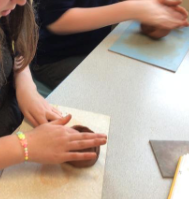
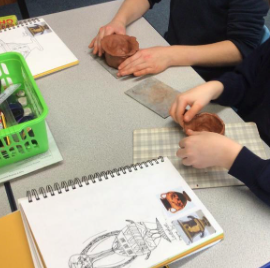
KS2 pupils studied the art and culture of Ancient Greece, focusing on the design and purpose of Greek clay pots. They explored how these pots were not only beautifully decorated but also used to tell stories and record important events from daily life and mythology. Pupils carefully planned their own designs, incorporating traditional patterns and motifs, before shaping and decorating their clay pots